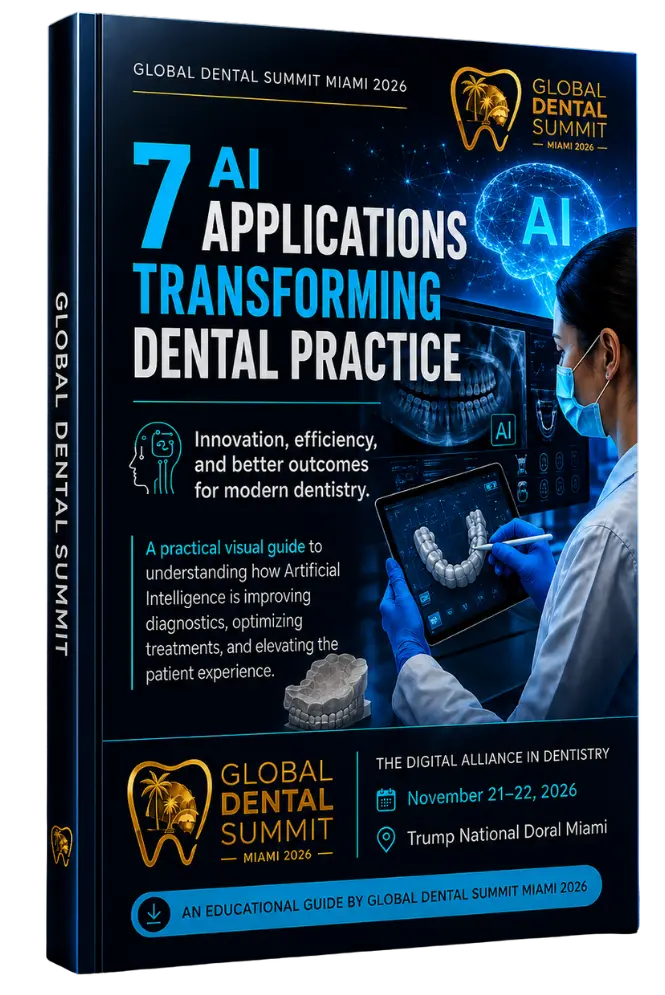
7 AI Applications Transforming Dental Practice
The Future of Dentistry Is Here
Artificial Intelligence (AI) is no longer a futuristic concept—it is becoming part of daily dental practice. From improving diagnostic accuracy to streamlining administrative tasks, AI helps dental professionals work more efficiently while enhancing patient care. The true value of AI lies in its responsible integration into clinical workflows, where it supports decision-making without replacing professional expertise.
1. Smarter Diagnostic Imaging
AI-powered systems assist clinicians by analyzing radiographs, CBCT scans, panoramic images, and bitewings. These technologies can help identify early caries, bone loss, periapical lesions, anatomical variations, and other findings, improving documentation and patient communication while leaving the final diagnosis in the hands of the clinician.
2. Better Treatment Acceptance
Patients are more likely to accept treatment when they clearly understand their condition. AI enhances communication through personalized simulations, educational visuals, and before-and-after comparisons, making complex treatment plans easier to explain.
3. Realistic Smile Simulations
Modern AI tools generate digital smile mockups and facial visualizations that help patients visualize potential outcomes. These tools are designed to improve communication and expectation management—not to guarantee exact clinical results.
4. Implant Planning with Greater Precision
By combining CBCT data, intraoral scans, and digital planning, AI supports more predictable implant positioning and guided surgery workflows. Clinical validation and final decisions always remain the responsibility of the dental professional.
5. Facial Esthetics and Smile Design
AI can evaluate facial symmetry, smile lines, gingival display, and dental proportions, providing valuable insights for personalized esthetic treatment planning while preserving clinical judgment.
6. Clinical and Administrative Efficiency
From appointment reminders and patient follow-ups to documentation and reporting, AI automates repetitive processes, allowing dental teams to dedicate more time to patient care.
7. Ethics Comes First
Artificial Intelligence is a powerful assistant, not a replacement for professional expertise. Responsible use requires transparency, human oversight, high-quality data, and adherence to ethical principles such as beneficence, non-maleficence, autonomy, and justice.
Final Thoughts
Artificial Intelligence is reshaping dentistry by improving diagnosis, planning, communication, and operational efficiency. The professionals who embrace these technologies responsibly will be better prepared to deliver exceptional patient care while leading the next generation of digital